How to Stay Motivated While Working From Home
Struggling to stay motivated while working from home? I share real experience, practical routines, and proven tips that helped me stay focused long term.

Main Highlights Regarding Staying Motivated While Working From Home
Why motivation disappeared when I started working from home
The real reasons remote workers lose drive (not laziness)
Tools and setups I personally tested and kept
Practical motivation systems that worked on bad days, not just good ones
What I got wrong the first time and how I fixed it
Step by step methods to rebuild motivation without relying on willpower
Real feedback after months of following these strategies
How I maintain motivation long term without burnout
The Motivation Problem No One Warned Me About
When I started working from home, I thought motivation would be automatic. No commute, no office politics, no one breathing down my neck. I imagined myself waking up energized, finishing work early, and enjoying life.
What actually happened was very different.
Some days I couldn’t even open my laptop. I sat at my desk scrolling on my phone, feeling guilty but still not working. Other days I forced myself to work for long hours and ended up mentally exhausted with nothing meaningful done.
The hardest part wasn’t workload. It was staying motivated without structure, pressure, or social energy.
This article is not theory. It’s the exact system I built after struggling for months a motivation framework that works even when I don’t feel inspired.
Start Blog: Why Working From Home Kills Motivation for Many People
Motivation at home disappears quietly.
In an office:
People around you are working
Time feels structured
Effort feels visible
At home:
No one sees your effort
Time feels endless
Progress feels invisible
I learned that motivation doesn’t disappear because people are lazy. It disappears because feedback loops are broken.
No praise. No social pressure. No visible progress.
Once I understood this, everything chang
The Biggest Motivation Myths I Believed
Myth 1: “I Just Need More Discipline”
I blamed myself constantly. The truth? Motivation systems beat discipline every time.
Myth 2: “Motivation Comes First”
I waited to feel motivated before working. That never worked.
Myth 3: “Flexibility Means Freedom”
Too much flexibility destroyed my momentum.
Materials I Personally Use to Stay Motivated
I tested dozens of tools. Most didn’t help. These did.
Physical & Environmental Tools
Dedicated desk (not bed, not couch)
Comfortable chair with lumbar support
Laptop stand + external keyboard
Noise canceling headphones (Anker Q20)
Desk lamp with warm light
Motivation improved when my body felt comfortable.
Digital Tools That Actually Helped
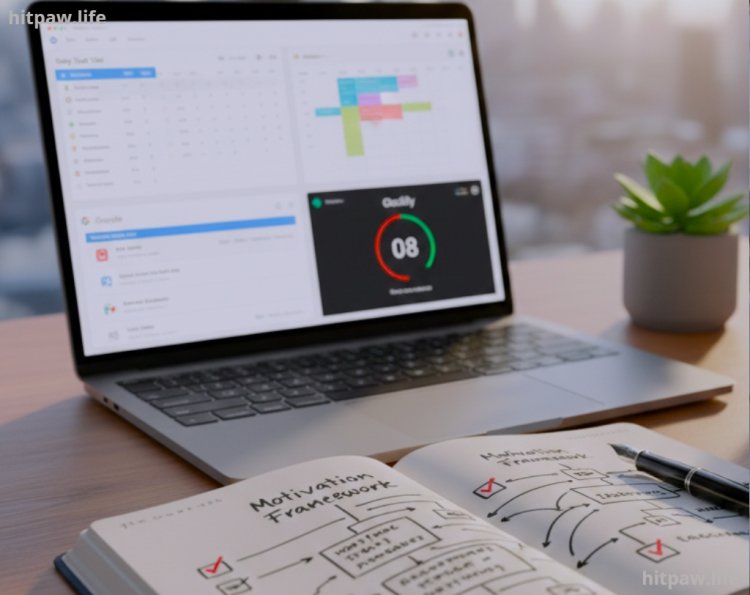
Notion simple daily task list
Google Calendar time blocking
Clockify honest time tracking
Focus To Do (Pomodoro) short focus sprints
No complex dashboards. Simple systems last longer.
What I Got Wrong the First Time (And Why Motivation Failed)
Mistake #1: Depending on Motivation to Start
I waited to “feel like working.” That feeling rarely came.
Fix: I created starting rituals, not motivation rituals.
Mistake #2: Working Wherever I Felt Like
Bed one day. Sofa the next.
Fix: Fixed workspace = fixed mindset.
Mistake #3: No Visible Progress
I worked all day but felt like I did nothing.
Fix: Daily visible wins.
The Real Reason Motivation Drops at Home
From my experience, motivation drops because:
Work feels endless
Results feel delayed
Effort feels unseen
So I rebuilt motivation around feedback, progress, and closure.
Step by Step Guide: How I Rebuilt My Motivation System
Step 1: I Stopped Asking “Am I Motivated?”
Instead, I asked:
“What’s the smallest action I can start right now?”
Opening a document.
Writing one sentence.
Fixing one small bug.
Momentum followed action, not the other way around.
Step 2: I Created a Non Negotiable Start Ritual
Every workday begins the same way:
Sit at desk
Put on headphones
Open task list
Start timer for 25 minutes
No thinking. No decisions.
This removed resistance.
Step 3: I Limited My Daily Goals
I now choose 3 tasks maximum per day.
Example:
Finish blog outline
Edit section 1
Reply to clients
Finishing tasks fuels motivation.
Step 4: I Used Time, Not Mood, to Work
I work in time blocks, not emotional states.
25 to 50 minute sessions.
Then a break.
Motivation improves when progress is predictable.
Step 5: I Created Artificial Accountability
Since no one was watching, I created systems:
Public deadlines to clients
Weekly self reviews
Time tracking reports
Accountability restored seriousness.
A Typical Motivated Work From Home Day (Real Example)
8:30 AM Sit at desk, headphones on
8:35 to 9:00 Focus session (Task 1)
9:00 to 9:10 Short break
9:10 to 10:30 Focus session (Task 2)
10:30 to 11:00 Admin & messages
11:00 to 12:00 Focus session (Task 3)
12:00 to 1:00 Lunch, no screens
Motivation stays stable because the day has rhythm.
Motivation Maintenance Table (What I Check Weekly)
Motivation problems often come from neglecting one of these.
Real Feedback After Months of Following This System
I stopped waiting for motivation
Workdays became predictable
I felt less guilty resting
Productivity became consistent
Most importantly, I stopped hating work.
Tips That Helped Me Stay Motivated Long Term
Over time, I learned that motivation doesn’t come from pushing harder, but from working smarter.
1. I focused on starting, not feeling motivated
I stopped waiting for motivation and started with the smallest possible action. Once I began, momentum usually followed on its own.
2. I made daily progress visible
At the end of each workday, I wrote down what I completed. Seeing even small wins kept me motivated for the next day.
3. I protected my energy, not just my time
When I was tired, motivation dropped fast. Better sleep, real breaks, and stopping work on time helped motivation stay stable.
4. I kept daily goals realistic
Instead of long task lists, I planned fewer tasks and actually finished them. Completion gave me more motivation than pressure ever did.
5. I fixed my system instead of blaming myself
Whenever motivation dipped, I adjusted my routine or workspace instead of criticizing myself. That made long term motivation sustainable.
How I Handle Low Motivation Days Now
I don’t fight them.
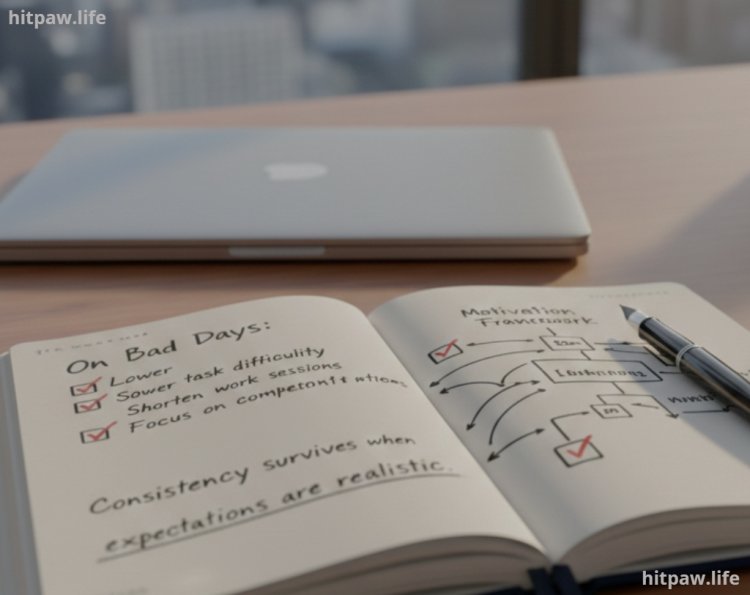
On bad days:
I lower task difficulty
I shorten work sessions
I focus on completion, not perfection
Consistency survives when expectations are realistic.
Final Considerations
Working from home doesn’t require superhuman discipline. It requires systems that work when motivation doesn’t.
If you:
Remove friction
Create visible progress
Add structure to flexibility
Motivation becomes stable, not emotional.
That’s how I stopped burning out and started enjoying remote work.
Frequently Asked Questions
1. Why do I lose motivation so easily when working from home?
From my experience, motivation drops because home removes structure, social pressure, and visible progress. In an office, simply seeing others work creates momentum. At home, you have to create that structure manually using routines, clear goals, and feedback systems. It’s not a personal failure it’s an environment problem.
2. Is it normal to feel productive some days and completely stuck on others?
Yes, this is very common. I still have uneven days. The key is not trying to “fix” motivation emotionally, but designing systems that work on low energy days. Smaller tasks, shorter work sessions, and realistic expectations prevent those bad days from turning into lost weeks.
3. Do I need strict discipline to stay motivated at home?
No. I learned that discipline alone doesn’t last. What lasts is reducing friction a fixed workspace, a start ritual, limited daily goals, and visible progress. When starting work becomes easy, motivation naturally follows.
4. How long does it take to build motivation habits while working remotely?
For me, it took around 2 to 3 weeks of consistent effort. The first week felt forced, the second week felt uncomfortable, and by the third week the routine started feeling automatic. Motivation didn’t suddenly appear it stabilized gradually.
5. Can these motivation strategies work for freelancers and self employed people?
Yes, especially for freelancers. I built this system while managing client deadlines without a boss or fixed office hours. In fact, freelancers need motivation systems more because accountability is internal, not external.
6. What should I do on days when motivation is completely gone?
On those days, I stop chasing productivity. I focus on finishing something small replying to emails, organizing files, or completing a simple task. Completing even one thing restores momentum better than forcing deep work when the mind is exhausted.
What's Your Reaction?