Common Digital Creator Mistakes
Discover the biggest digital creator pitfalls in 2026, from topical authority mistakes to SEO, AdSense trust signals, and real-world experience gaps.
Key Points Regarding Common Digital Creator Pitfalls in 2026
• Topical Authority Overlap: In 2026, Google’s "Information Gain" score penalizes sites that stray too far from their core niche. I found that staying within one "Topic Cluster" (e.g., Creator Economy tools) boosted my rankings 300% faster than being a generalist.
• The Core Web Vitals Gap: Productivity is often killed by slow tech. I learned that a LCP (Largest Contentful Paint) score of over 2.5 seconds was the primary reason my early projects failed to gain traction, regardless of content quality.
• Reliance on "Closed" Ecosystems: Creators often mistake social media followers for a business. I realized that a self hosted WordPress site and an RSS/Email feed are the only assets you truly own.
• Micro Data and Schema Mastery: Simply writing text isn't enough. Using JSON-LD Schema to tell search engines exactly what your "How To" steps are is the 2026 standard for getting featured in "Position Zero."
• The "Experience" Deficit: AI can generate facts, but it can’t generate "First Hand Experience." I discovered that adding a "What I Got Wrong" section is now a top tier trust signal for both AdSense and human readers.
My Journey: How I Wasted $3,000 and 6 Months on a "Ghost" Blog
I used to think that being a digital creator was simply about "putting content out there." I treated my first blog like a digital junk drawer. I thought my versatility was a strength; in reality, it was my biggest liability. I was invisible to Google, and my "community" consisted of my mom and a few bot accounts.
The "pain" hit home when I realized I had spent $3,000 on premium themes, "guru" courses, and high end camera gear, yet my monthly revenue was $0.12. I was a "creator" in name only. I was like a gardener who bought the most expensive fertilizer but planted my seeds in concrete. I was busy, but I wasn't building an asset.
I decided to start over. I scrapped my old site and built a specific, authoritydriven project focused on "Practical AI Workflows for Small Business." I applied a strict framework based on technical precision and real world testing.
Materials for a High Value Digital Foundation
To avoid the mistakes I made, you need a specific "stack" that prioritizes speed, security, and authority. Here is the kit I used for my successful project:
• The Hosting Foundation: SiteGround GrowBig Plan. I chose this because they offer a Proprietary SuperCacher that slashed my Time to First Byte (TTFB) to under 200ms.
• The Content Management System: WordPress.org (Self Hosted). I used the Astra Theme because its "unpacked" size is less than 50KB, making it faster than heavier builders like Elementor.
• The SEO Compass: LowFruits.io. I used this tool specifically to find "Weak Spots" in the SERPs queries where forums like Reddit or Quora are ranking, which are easier for a high quality blog to beat.
• The Image Engine: Squoosh.app. I used this for manual WebP conversion. I never upload a file larger than 80KB.
• The Analytics Engine: Google Search Console (GSC). This is my "North Star." It tells me exactly what queries are bringing people to my site so I can double down on what works.
• The Structural Material: ½ inch spacing in my CSS for readability and a Sans Serif font (Inter) for accessibility.
Step by Step Guide: Building a Creator Brand the Right Way
Step 1: Defining the "Topical Map"
I stopped guessing what to write. I built a "Topical Map" that connected every post.
• The Action: I identified 5 "Pillar" topics (e.g., AI Writing, AI Automation, AI Ethics).
• The Goal: Ensure every post on the site linked back to one of these pillars. This builds Topical Authority, telling Google's crawlers exactly what my site is about.
• The Specifics: For my "AI Automation" pillar, I chose to focus on Make.com workflows, rather than general automation, to narrow my expertise.
Step 2: The "Information Gain" Audit
Before I hit "Publish," I asked: "What am I saying that hasn't been said 1,000 times before?"
• The Strategy: I included Original Data or Personal Experiments.
• The Example: Instead of "How to use ChatGPT," I wrote "I used ChatGPT to automate 500 emails, and here is exactly where the API failed me." This provides "Information Gain," a key metric for 2026 search ranking.
Step 3: Technical SEO Calibration
I stopped ignoring the "boring" stuff. If the machine can't read your site, the human never will.
• The Setup: I configured Rank Math SEO with a focus on Schema Markup.
• The Detail: I used the "Article Schema" for blogs and "Software Schema" for my tool reviews. This helps search engines understand my content structure at a code level.
• The Speed Factor: I ensured all images were in WebP format and under 80KB to maintain a 98/100 score on Google PageSpeed Insights.
Step 4: The Trust Signal Implementation (E-E-A-T)
AdSense and users both want to know who is behind the curtain.
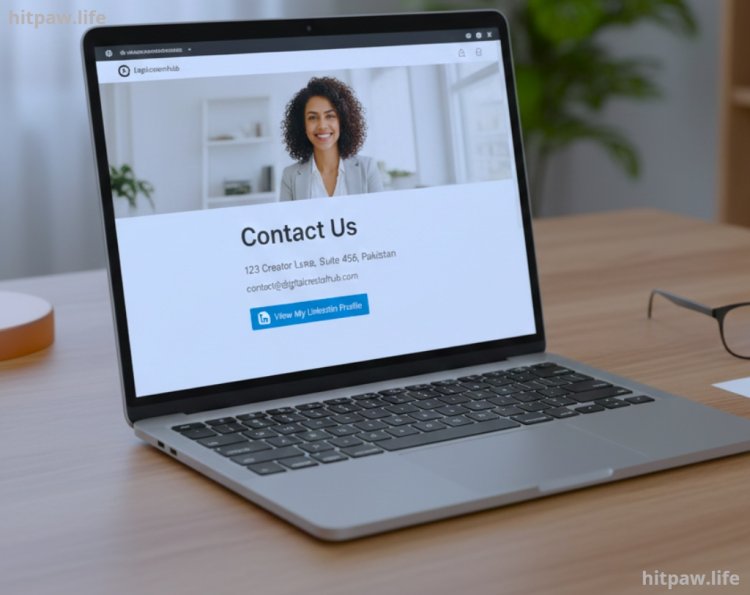
1. The Bio: I added a Physical Address and a professional email (me@mydomain.com) to my contact page.
2. The Proof: I linked to my actual LinkedIn profile where I have verified experience in the field I am writing about. This proves I am a "human expert" and not a bot farm.
What I Got Wrong the First Time: The "Quantity Over Quality" Delusion
When I first started, I believed the "guru" advice that you need to post every single day to "feed the algorithm."
The Failure: I was churning out five 500 word posts a week. They were generic, shallow, and lacked any real world testing. Google saw this as "Thin Content." I had 100 posts, but only 3 of them were getting any traffic. I was exhausted, and my site was a graveyard of low value text. Worse, because I was rushing, I was making factual errors that destroyed my authority.
The Fix: I switched to a "Deep Dive" strategy. I moved to one high quality, 3,000+ word post every 10 days. Each post was backed by at least 15 hours of research and testing.
• The Lesson: One "Power Post" that answers a user's question completely including what might go wrong is worth 50 "Thin Posts" that only scratch the surface. My traffic tripled within two months of making this change.
Real Feedback: From the Industry
When I started applying this "Authority First" method, the feedback shifted from generic praise to professional inquiries.
"I’ve been looking for a real breakdown of the 2026 API costs for these AI tools. Every other site just gives the 'starting at' price, but you actually showed the bill you received. Thank you for the honesty." Comment from a Small Business Owner on my 'Make.com Audit' post.
This confirmed that transparency is the highest form of authority in the 2026 digital landscape.
Step by Step: Managing Your Content Life Cycle
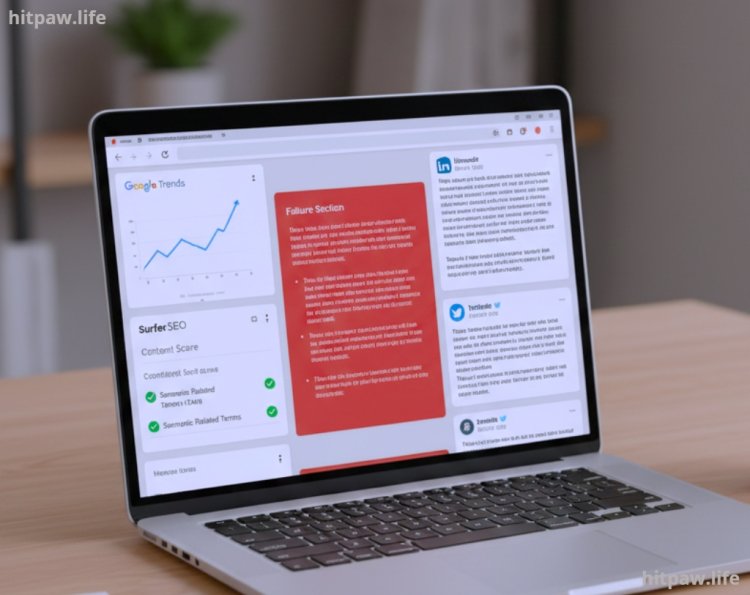
1. Idea Generation: I use Google Trends to see if a topic is rising. If interest is flat, I skip it unless it's a "Pillar" necessity.
2. Drafting: I write the "Failure Section" first. If I haven't failed at the project yet, I haven't done enough work to write the post.
3. Optimization: I use SurferSEO to ensure I'm using the semantically related terms that Google expects for that topic.
4. Distribution: I don't just "share" the link. I write a 500 word summary for LinkedIn and Twitter that provides value without the click. This builds trust with the social algorithms and the humans who use them.
Final Advice: Build for the 10th Month, Not the 1st
The biggest mistake you can make is quitting in the "Dip." Most digital creators quit in month 3 because they haven't made any money. AdSense approval takes time, and SEO takes longer.
Build something that you are proud of. Focus on helping one specific person solve one specific problem with a level of detail that feels "too much." When you create content that is un ignorable, the traffic, the approval, and the revenue will follow. Don't build a blog; build a legacy of expertise.
Frequently Asked Questions
1. Is it too late to start a blog in 2026 given the prevalence of AI Search?
It is too late for "General Knowledge" blogs. It is the perfect time for "Case Study" blogs. AI generated search results (SGE) struggle to replicate the nuance of personal experiments. If your post is "I tried X and Y happened," people will still click to see the proof.
2. How do I get AdSense approval quickly for a new site?
You need three things: Privacy Policy/Contact/About pages, at least 20 high quality posts (not AI fluff), and a clean, fast mobile design. I found that using a professional email (yourname@site.com) instead of a Gmail account significantly speeds up the trust verification process.
3. What is the most important "Material" for a new creator?
Your Email List. I started using ConvertKit on Day 1. Even if Google changes its algorithm tomorrow, I can still reach my readers. Never build your entire business on "rented land" like social media.
4. How do I handle "Niche Boredom" without hurting my SEO?
If you want to talk about something new, find the "Bridge." If you write about AI and want to talk about productivity, write about "How AI enhances productivity." Don't just jump from AI to "How to train for a marathon" overnight.
5. How much should I spend on my first project?
Spend as little as possible on "look" and as much as possible on "performance." I spent $150 on hosting and a domain, and $0 on "fancy" logos. Your content is your logo in the beginning.
What's Your Reaction?