Productivity Tips Every Digital Creator Should Know
Struggling to stay productive as a digital creator? I share my real life tips, routines, and tools that helped me focus, finish tasks, and avoid burnout.
Key Points Regarding Productivity for Digital Creators
Why productivity is the #1 challenge for digital creators
Real problems I faced juggling multiple projects
Tools I actually use for tracking, scheduling, and automation
Step by step routine that helped me finish tasks faster and stress less
Mistakes I made and how I corrected them
Real feedback from months of working on multiple platforms
Pro tips, maintenance tables, and strategies for long term productivity
My Personal Productivity Struggles
When I first started as a digital creator, I imagined that I would thrive in freedom. No office, no boss, no 9 to 5. I could set my own schedule, create whatever I wanted, and produce content at my pace.
Reality hit hard.
I constantly switched between projects editing videos, drafting blog posts, creating graphics, managing social media, and learning new software. Even though I was busy all day, at night, I often felt like I hadn’t accomplished anything significant. My workflow was chaotic. My calendar was overloaded. Deadlines were slipping. Motivation dropped.
I realized that excitement alone was not enough. I had to treat productivity as a system rather than hoping for inspiration to strike. I experimented, failed, adjusted, and gradually built a workflow that actually works in real life. This article is the result of those months of trial and error.
Why Productivity is Hard for Digital Creators
Digital creators face unique challenges compared to traditional workers:
Infinite Task List There’s always something to do: scripting, filming, editing, publishing, marketing, learning.
Low External Accountability You are responsible for deadlines and output. No manager is watching you.
High Distraction Environment Your computer has everything: social media, emails, entertainment, notifications.
Creative Burnout Pushing yourself to produce new ideas every day drains mental energy.
I learned that these problems are not laziness they are structural challenges. You need systems, not motivation hacks.
Tools I Actually Use to Boost Productivity
I tried almost every productivity app, system, and planner out there. Here’s what stuck for me.
Digital Tools
Notion For task management, content planning, project boards, and idea storage
Google Calendar Time blocking every task, including deep work and breaks
Clockify Tracks actual working time versus distractions
Canva / Figma For fast graphics and design drafts
Trello Optional, for collaborative projects
Focus To Do Pomodoro timer for structured work sessions
Physical Tools
Standing Desk Reduces fatigue and improves focus
Noise Canceling Headphones (Sony WH-1000XM4) Blocks out distractions
Notebook & Pen Quick brain dumps and sketching ideas
Whiteboard Visual tracking of ongoing projects
Comfortable Chair Prevents back pain and keeps me working longer
What I Got Wrong the First Time
I made multiple mistakes when trying to improve productivity. Learning from them was essential.
Mistake #1: Doing Everything at Once
I tried blogging, YouTube, social media, and client projects all in the same week. Result: burnout and frustration.
Fix: I learned to prioritize using the Eisenhower Matrix focus on urgent and important tasks first.
Mistake #2: Overcomplicating Tools
I tried 7 to 8 different productivity apps. Most became unused clutter.
Fix: I now keep Notion, Google Calendar, and Clockify as the core, optional Figma or Canva for creative work.
Mistake #3: Ignoring Rest
I worked long hours without breaks, thinking effort = productivity. My creativity tanked.
Fix: Introduced Pomodoro sessions, scheduled breaks, and physical movement.
Mistake #4: Not Tracking Real Progress
I worked all day but often felt like I achieved nothing.
Fix: Implemented daily review and visible wins to track accomplishments.
Step by Step Productivity Routine I Use Daily
Here’s my exact workflow. It’s flexible but structured enough to maintain productivity.
Step 1: Morning Brain Dump (10 to 15 min)
I open Notion and write down all tasks, ideas, deadlines, and random thoughts. This clears my mind and creates a master task list.
Step 2: Prioritize Tasks (5 to 10 min)
I pick 3 main priorities for the day. Everything else is secondary.
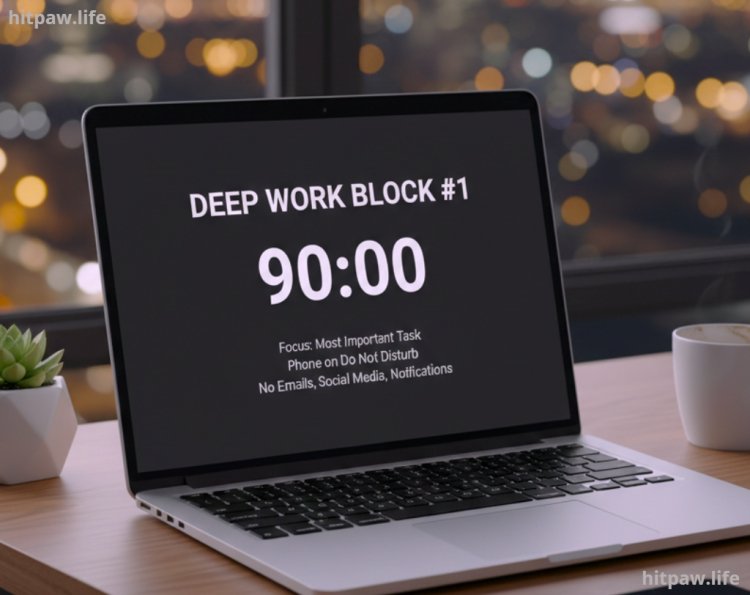
Step 3: Deep Work Block #1 (90 min)
Focus entirely on the most important task
Phone on Do Not Disturb
No emails, social media, or notifications
Step 4: Short Break (15 min)
Stretch, walk, hydrate
Avoid screens
Step 5: Deep Work Block #2 (60 to 90 min)
Continue top priority task or switch to secondary task
Step 6: Admin & Communication Block (30 to 60 min)
Respond to emails, messages, client updates
Quick review of smaller tasks
Step 7: Lunch Break (30 to 60 min)
Screen free, preferably away from desk
Step 8: Creative / Secondary Work Block
Content creation, design drafts, idea generation, testing tools
Step 9: Daily Review & Planning (15 min)
Check off completed tasks
Update Notion board
Set top 3 priorities for the next day
Practical Examples From My Real Life
YouTube Editing: I tracked editing in Clockify and discovered I was spending 2 hours on tasks that could be done in 45 minutes. Adjusted workflow saved 10+ hours per week.
Blog Drafting: Using Pomodoro sessions, I finished drafts in 2 to 3 hours instead of spending the entire day.
Client Projects: Visual tracking on a whiteboard helped me see progress clearly. Moving tasks to “Done” increased motivation and reduced anxiety.
Tips That Helped Me Stay Productive Long Term
Protect Deep Work Blocks: Treat them like appointments you can’t skip.
Limit Daily Priorities: Focus on 3 main tasks per day.
Automate Repetitive Tasks: Use templates, shortcuts, and automation.
Take Breaks Seriously: Mental rest is as important as work.
Track Progress Visually: Whiteboards or Notion boards give instant feedback.
Review Weekly: Adjust workflow instead of forcing yourself to overwork.
Batch Similar Tasks: Editing multiple videos at once or scheduling posts in one session saves time.
Use Quick Decision Rules: I limit email checking to 2 times a day to avoid distraction.
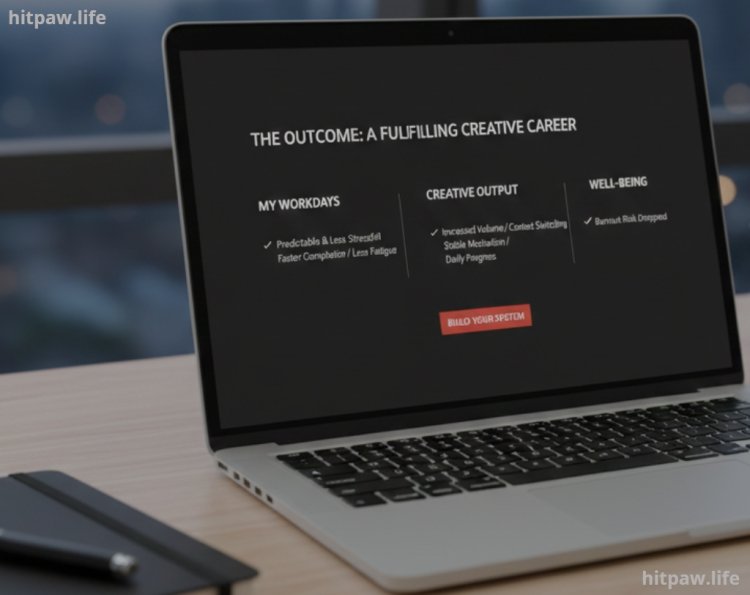
Real Feedback From My Experience
My workdays became predictable and less stressful
I completed tasks faster with less mental fatigue
My creative output increased because I wasn’t constantly switching contexts
Motivation stayed stable because I could see progress daily
Burnout risk dropped dramatically
Handling Low Motivation Days
Even with a perfect system, some days are hard. My strategy:
Shrink tasks: Focus on something achievable, like replying to emails or brainstorming ideas.
Reduce expectations: Skip deep work if energy is too low.
Focus on momentum: Completing small tasks builds motivation.
Final Considerations
Productivity isn’t about working harder it’s about working smarter. For digital creators, focus and energy matter more than being busy.
Key lessons I learned:
· Prioritize impact: Focus on tasks that truly move projects forward.
· Protect deep work: Uninterrupted sessions are where real progress happens.
· Track progress visually: Seeing completed tasks boosts motivation.
· Adjust the system, not yourself: Fix workflow issues instead of forcing discipline.
· Rest matters: Breaks and downtime sustain creativity.
By following these strategies, I went from chaotic and burned out to focused, motivated, and productive. Productivity is a journey start small, adjust, and protect your energy.
FAQs
1. Do I need all the productivity tools mentioned?
Not at all. Start with just Notion, Google Calendar, and Clockify. Only add extra tools like Canva or Trello if they genuinely make your workflow easier. Too many tools can create clutter and actually reduce productivity.
2. How many tasks should I realistically focus on each day?
I focus on 3 main priorities per day. This keeps me from spreading myself too thin while ensuring meaningful progress. Secondary tasks can wait until the top priorities are complete.
3. What should I do on low motivation days?
Even if motivation is low, I do one small, achievable task like replying to emails, organizing files, or drafting ideas. Completing even a minor task restores momentum and prevents a day from being wasted.
4. Can beginners use these strategies?
Absolutely. Even if you have only one project or platform, a clear workflow, daily priorities, and time blocking make a huge difference in output and focus.
5. How do I avoid burnout as a digital creator?
Burnout usually comes from overworking and scattered focus. I avoid it by protecting deep work blocks, taking real breaks, and tracking energy levels. A short walk, stretching, or even stepping away from screens helps maintain creative energy.
6. How long does it take for productivity habits to stick?
For me, it took 2 to 3 weeks of consistent practice. The first week felt forced, the second week uncomfortable, and by the third week, the system started running automatically. Consistency is key.
7. What if I fail to complete my top tasks?
Don’t stress. I review why tasks weren’t completed was it overambitious planning, distractions, or low energy? Then I adjust my workflow or priorities instead of forcing extra work.
What's Your Reaction?