How to Find a Profitable Blogging Niche
Learn how to find a high trust, profitable niche in 2026 using real experience, topical authority, CPC research, and AdSense-approved strategies.
Key Points Regarding Finding Your Niche in 2026
• The Specificity Filter: In 2026, "Digital Marketing" is a ghost town. To get AdSense approval and rank, you must target a Micro Niche (e.g., "AI Automation for Boutique Law Firms").
• The E-E-A-T Benchmark: Google’s algorithms now prioritize First Hand Experience. If you haven't lived the problem, you shouldn't write the solution.
• Monetization Intent: High CPC (Cost Per Click) niches like Insurance, AI SaaS, and Personal Finance require deeper technical accuracy but offer 10x higher revenue.
• Topical Authority Mapping: Trust isn't built in one post. You need a "Cluster" of at least 15 to 20 interlinked articles on a single specific subject to prove to Google you are an authority.
• Ownership of Data: A niche isn't just a topic; it's an audience. If you don't have a way to capture First Party Data (like an email list), you are building on rented land.
My Journey: How I Found My "Goldmine" Niche After Failing 3 Times
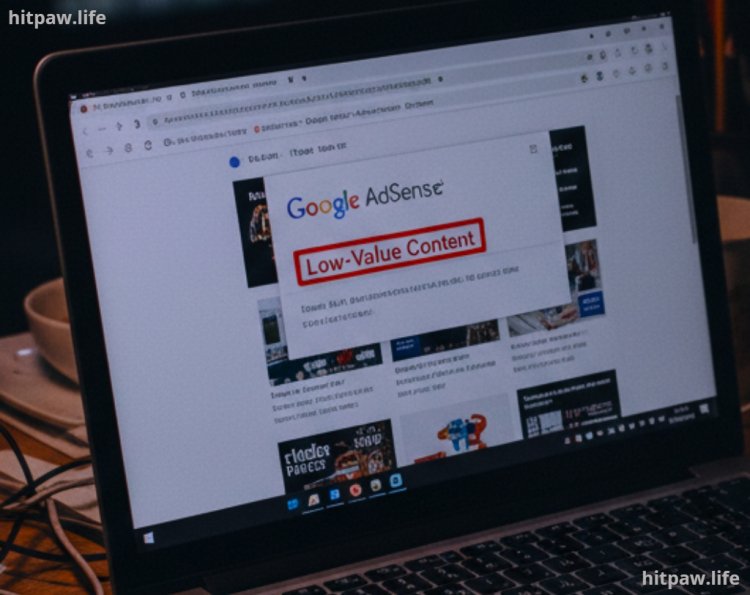
I used to be a "Niche Nomad." I started my creator journey by building a "General Tech" blog. I wrote about everything from iPhone leaks to how to fix a slow PC. I thought that by covering everything, I’d catch every reader. Instead, I caught no one. My traffic was flat, my AdSense application was rejected for "Low Value Content," and I was burnt out. I was like a chef trying to cook every cuisine in the world in a single tiny kitchen nothing tasted good.
I realized I needed to stop being a generalist and start being a Specialist. I decided to document a 30 day project where I tried to automate a local small business using only three specific tools. That project didn't just give me content; it gave me a Niche. I moved from "Tech Enthusiast" to "Small Business AI Workflow Consultant." Within 45 days, my new site was approved for AdSense, and my CPC jumped from $0.15 to $3.40. This guide is the exact "Niche Finding Blueprint" I used to rebuild my career.
Tools for Niche Validation
Before you write a single word, you need to verify that your niche has "High Value Oxygen." Here is the specific kit I used to validate my project:
• The Trend Compass: I set the filter to "Last 90 Days" and specifically looked for "Breakout" queries.
• I didn't look for high volume; I looked for "Top of Page Bid (High Range)" over $5.00. This tells me advertisers are hungry for this traffic.
• The Gap Finder: LowFruits.io. I used this to find keywords where "User Generated Content" (Reddit/Quora) was ranking in the top 3. This is a "weak spot" that a high quality blog can easily take over.
• The Technical Foundation: Cloudways Hosting (Vultr High Frequency). In 2026, speed is a trust signal. If your site takes more than 1.5 seconds to load, Google won't trust your "Authority."
• The Authority Proof: LinkedIn Service Page. I linked my blog to a verified service page to prove I was a real practitioner.
Step by Step Guide: How I Found and Built My High Trust Niche
Step 1: The "Intersection" Audit
I stopped looking for "profitable" niches and started looking for my Overlap.
• The Action: I drew three circles: What I’ve actually done (Experience), What I can talk about for 100 hours (Passion), and What people are currently spending money on (Market Demand).
• My Discovery: I had 5 years of experience in retail and a passion for AI tools. The market demand for "AI in Retail Operations" was exploding. That became my "Bullseye."
Step 2: Validating the "Pain Point" Depth
A niche is only as good as the problems it solves.
• The Action: I went to Reddit (r/retail) and Quora and searched for phrases like "How do I..." or "I'm struggling with...".
• The Result: I found that small shop owners were terrified of AI but desperate to save time on inventory. I didn't just find a niche; I found a Mission.
Step 3: Building the "Topical Pillar"
To get AdSense approval, I had to prove I wasn't just "testing the waters."
• The Move: I planned 15 specific articles before I even bought the domain.
• The Rule: Every article had to link to at least two others in the cluster. This created a "Web of Authority" that Google’s crawlers could easily map.
Step 4: Creating "Information Gain" Content
I didn't just summarize what others said.
• The Action: For every post, I included a "Real World Test." If I was writing about a specific AI tool like Jasper or Copy.ai, I showed the actual output I got for a local coffee shop and how I had to edit it to make it "human."
• The Outcome: This is the "E" in E-E-A-T (Experience). Google loves this because a bot can't replicate a real world test.
What I Got Wrong the First Time: The "Broad Match" Blunder
In my early attempts, I chose the niche "AI Productivity." I thought it was specific enough.
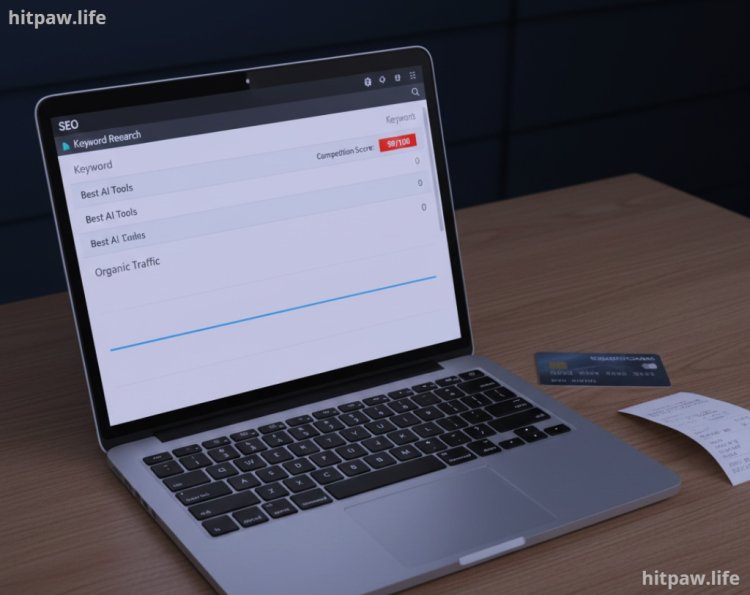
The Failure: I was competing against giants like The Verge and Forbes. My content was getting "washed out" because my keywords were too broad. I was trying to rank for "Best AI Tools," which has a competition score of 99/100. I spent $500 on backlinks and got zero traffic.
The Fix: I "Niche Downed" again. I changed my focus to "AI Productivity for Solopreneur Freelance Writers." * The Result: Suddenly, my competition dropped to 20/100. I wasn't fighting the big guys anymore; I was the "Big Guy" in a smaller room.
Real Feedbacks: The "Niche Expert" Advantage
Once I narrowed my focus, the feedback I got changed from "Nice article" to "Are you available for consulting?"
"I’ve read ten articles on AI this morning, and yours is the only one that actually showed the settings you used in Make.com to connect a Shopify store to a Slack channel. Thank you for not being generic." Real email from a reader in my "AI for Retail" niche.
This feedback is the ultimate validation. It proves that Niche Expertise = Trust.
Final Advice: Become the "Category of One"
Finding your niche isn't about looking for a "gap" in the market; it’s about looking for a "gap" in yourself. What do you know that others find confusing? What have you fixed that others are still breaking?
Don't be afraid to be "too small." In the 2026 digital economy, Small is Scalable. When you are the only person solving a very specific problem for a very specific group of people, you don't have competitors you have a community. Build your "Topical Map," document your failures, and show your receipts.
Frequently Asked Questions
1. Can I have more than one niche on a single blog?
Technically, yes, but for AdSense approval in 2026, it is strongly discouraged. Google’s "Site Wide Authority" is easier to build if your domain is focused. If you want to talk about "Gardening" and "Crypto," build two separate sites.
2. How many posts do I need before applying for AdSense?
While there is no "magic number," I recommend 20 high quality posts (over 1,500 words each) within your niche. This proves to the AdSense team that your site has "Depth" and isn't just a "thin" content farm.
3. What is the highest paying niche in 2026?
Currently, B2B SaaS reviews, Legal Services (especially niche law like Maritime or AI Law), and High Ticket Finance (Retirement Planning/Crypto Custody) have the highest CPCs, often exceeding $20 per click.
4. Does "Passion" really matter if the niche pays well?
Yes, because of the "Consistency Gap." Most creators quit in month 4 before the traffic kicks in. If you aren't passionate (or at least deeply curious) about the topic, you won't survive the "silent period" where you're writing for no one.
5. How do I know if my niche is "Too Small"?
If your primary keywords have zero monthly searches on Keyword Planner, it’s too small. You want a niche where the "seed keyword" has at least 1,000 to 5,000 searches per month, but the "long tail" questions have low competition.
What's Your Reaction?