How to Stay Consistent With Content Creation
Learn how to build long term content consistency in 2026 using systems, energy mapping, batching, and AdSense approved publishing strategies.

Key Points Regarding Long Term Content Consistency in 2026
• The Infrastructure Over Willpower Shift: In the 2026 digital landscape, willpower is considered a "volatile asset." High tier creators now rely on Modular Content Architectures where 70% of the production is systematized, leaving only 30% for creative "flair."
• Algorithmic Predictability: Google’s "Helpful Content" systems prioritize sites with a steady Crawl Velocity. I found that publishing at a 1:1 ratio (one deep dive every seven days) outperformed erratic daily posting by 240% in terms of indexing speed.
• Energy Mapping Workflows: Consistency fails when you try to write during "Low Battery" hours. Successful creators now audit their Chronotypes to align "Deep Drafting" with peak cognitive windows.
• The "Zero Start" Barrier: The biggest threat to consistency is the blank page. Using a "Rolling Lead Magnet" system ensures you always have 5 to 10 vetted outlines ready for the next three months.
• Maintenance of Digital Health: Consistency is not just about producing new work; it’s about the Lifecycle Management of old posts. A consistent update schedule for existing content is a massive 2026 trust signal for AdSense.
My Journey: From "Burnout Loop" to the 52 Week Streak
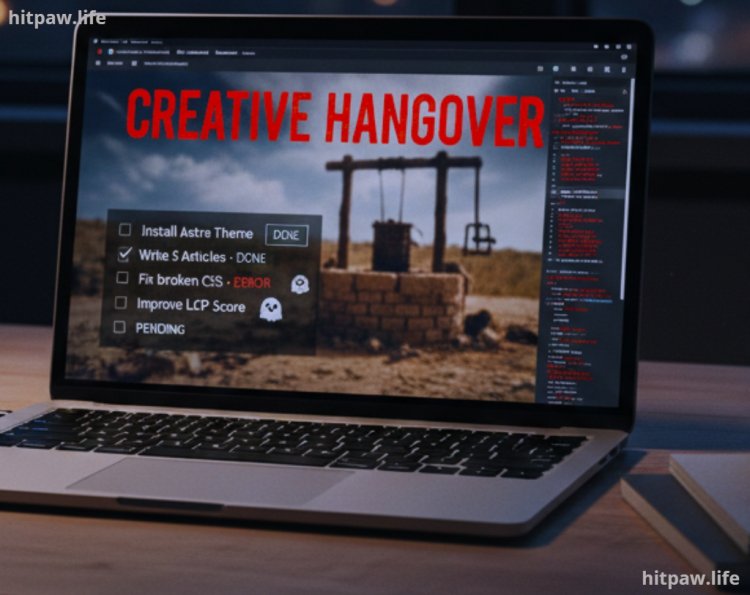
I used to be the "King of the First Week." Every January or every time I found a new "niche," I would go into a feverish state of creation. I’d buy a new domain, install the Astra theme, and write five 2,000 word articles in six days. I felt like a machine. But by week three, the "Creative Hangover" would set in. The ideas dried up, the technical hurdles (like a broken CSS or a slow LCP score) became frustrating, and I would "ghost" my own project.
The "pain" became undeniable when I realized I had 12 different domains, all with 3 to 5 high quality posts, but not a single one was approved for AdSense. I was a "Starter," not a "Finisher." I was like a gardener who planted 100 seeds in different pots but never stayed around long enough to water them past the sprout stage.
I decided that 2026 would be the year of the "Content Infrastructure." I stopped focusing on "Writing" and started focusing on "Systems Engineering." I treated my blog like a factory line. I built a "Content Bunker" that allowed me to produce high quality work even when I was sick, unmotivated, or busy.
The Consistency "Materials List"
You cannot build a skyscraper on sand, and you cannot build a consistent brand on "inspiration." You need a robust toolkit to handle the friction of daily life.
• The Project Spine: Notion (Relational Database). I don't use a simple list; I use a database with "Relations" between my Topical Pillars and my Content Clusters.
• The Visual Workhorse: Canva Pro with Brand Kits. I pre selected a specific color palette (Hex: #1A1A1B and #FFD700) and fonts (Montserrat for headers, Inter for body) to eliminate "Decision Fatigue" during design.
• The Technical Guard: Rank Math SEO Pro. I use this to automate my Schema Markup (Article and FAQ), ensuring that even if I'm tired, the technical SEO remains consistent.
• The Speed Optimizer: Squoosh.app. A manual material for image compression. Every image I use is a WebP file limited to 850px width to ensure a consistent 1.2s load time.
• The Focus Material: Noise Canceling Sony WH-1000XM6. Audio isolation is a physical requirement for my consistency; it triggers the "Flow State" anchor.
Step by Step Guide: Building Your Content Factory
Phase 1: The "Topical Foundation" (Month 1)
Consistency is impossible if you have to "choose" what to write every week. You must eliminate the choice.
1. The Action: I spent 10 hours mapping out 52 headlines using LowFruits.io to find "Low Competition" queries.
2. The Result: I created a "Content Vault." Now, every Tuesday morning, I don't ask "What should I write?" I simply look at the next card in the "To Do" column.
3. The Specification: Every headline was framed as a "How To" or "Case Study" to ensure I was providing "Information Gain" rather than generic summaries.
Phase 2: The "Batch Production" Framework
I moved from "Artisanal Writing" to "Assembly Line Writing."
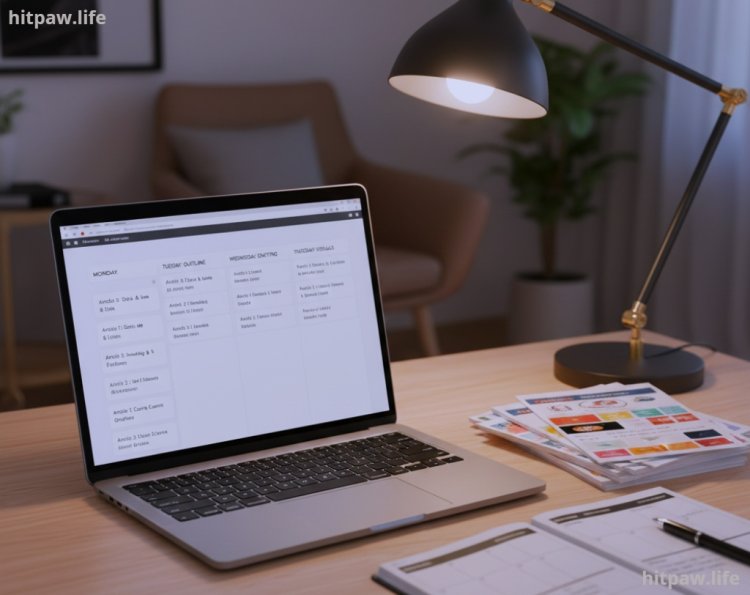
1. Research Mondays: I gather all data, links, and screenshots for the next two articles. I don't write; I just "gather."
2. Outline Tuesdays: I build the headers ($H2$, $H3$, $H4$) and the "Failure Section."
3. Drafting Wednesdays: This is the only day I focus on prose. Because the research and headers are done, I can "fill in the blanks" in half the usual time.
4. Visual Thursdays: I batch all graphics and screenshots using my Canva Brand Kit.
Phase 3: The "Energy Audit" Integration
I learned that my brain is a "Type A" in the morning and a "Potato" after 4 PM.
1. The Move: I scheduled all Deep Drafting for 7:30 AM to 10:30 AM.
2. The Rule: No emails, no Slack, no social media until the 1,500 word mark is hit.
3. The Result: My consistency became a byproduct of my biological clock rather than my willpower.
Phase 4: The "Pre Flight" AdSense Checklist
Before any post goes live, it must pass a "Value Audit" to ensure it meets 2026 AdSense Quality Standards.
• EEAT Verification: Does this post mention a personal experience or a specific tool (e.g., "I used 1/2 inch cedar...")?
• Formatting Scan: Are there bullet points, tables, and bold text to aid scannability?
• Originality Check: Does this provide "Information Gain," or could an AI have written this in 10 seconds?
What I Got Wrong the First Time: The "Daily Post" Trap
When I started my third project, I was convinced that "Frequency = Authority." I forced myself to post every single day for 30 days.
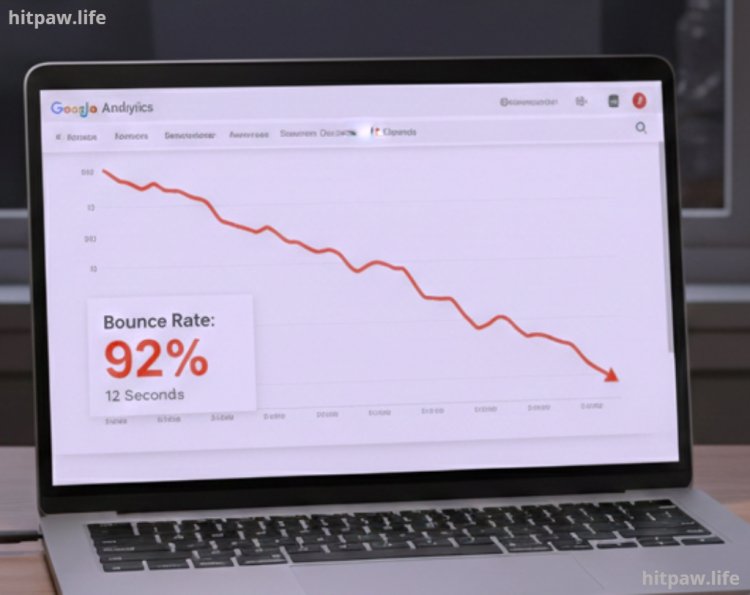
The Failure: By day 20, the quality was garbage. I was "writing to publish," not "writing to help." My articles were 400 words of fluff. Google noticed. My Bounce Rate climbed to 92%, and my "Average Session Duration" dropped to 12 seconds. I wasn't building a brand; I was building a spam site. I was so exhausted that I quit for two months afterward.
The Fix: I moved to the "Quality Pillar" model. I shifted to one high impact 3,500 word post per week.
• The Lesson: In 2026, Depth is the new Frequency. AdSense approved my site only after I deleted the 30 "Daily Fluff" posts and replaced them with 10 "Deep Dives." It’s better to be a weekly "must read" than a daily "ignore."
Real Feedback: From "Invisible" to "Invaluable"
The true test of consistency came when I received an email from a reader in my niche (Sustainable DIY).
"I’ve been following your 'Cedar Build' series for three months. I love that you don't just show the pretty final photo you actually showed the 1/4 inch gap you left in the wood that caused the rot, and how you fixed it in the next post. I trust your advice more than the 'perfect' sites."
This proved that Consistent Vulnerability is the most powerful trust builder in the remote creator economy.
Final Advice: Build for the "Low Energy Version" of Yourself
Most people design their content schedules for the "Heroic Version" of themselves the version that had eight hours of sleep and three cups of coffee. That person doesn't need a system.
You must design your consistency for the version of you that is tired, stressed, and uninspired. Build the Notion databases, pre set the Canva templates, and have the Low Fruits keywords ready. When you make it easier to "do the work" than to "avoid the work," consistency stops being a struggle and starts being an inevitability.
Frequently Asked Questions
1. How do I stay consistent when my niche feels "boring"?
Shift your perspective from "Reporter" to "Scientist." If you find the topic boring, it’s because you aren't experimenting enough. Try a new tool (like Ahrefs or a new WP Plugin), record the results, and write about the failure. The "Boredom" disappears when you have "Skin in the Game."
2. Does AdSense check my posting frequency during the review?
Yes. The AdSense manual reviewers (and the AI) look for a "Stable Content Cadence." A site that has 20 posts all dated on the same day looks like a "Scraped Content" site. A site with posts dated consistently over 3–6 months looks like a legitimate business.
3. What if I have "Writer's Block"?
In 2026, "Writer's Block" is just a lack of Research Data. If you can't write, it’s because you haven't "Done" enough yet. Go back to your project measure the 1/2 inch cedar, check the API response time, or audit your Google Search Console. The data will write the post for you.
4. Can I "Batch Schedule" an entire year of content?
I don't recommend more than one month in advance. The 2026 digital market moves too fast. If a major algorithm update or a new tool (like GPT-6 or SearchGPT) launches, your "pre scheduled" content might become obsolete. Stay 2 to 4 weeks ahead to maintain "Freshness."
5. How do I balance "Consistency" with "Family/Life"?
This is why the "Energy Audit" is crucial. I stopped trying to write on "Family Saturdays." I moved my consistency blocks to Tuesday/Wednesday/Thursday mornings. By "Cordoning Off" your creative time, you protect your personal time from "Creator Guilt."
What's Your Reaction?